Musk Says Chip Toolmakers Are Speeding Up Deliveries for Terafab
SpaceX and Tesla are aiming to begin volume chip production at their joint Texas facility by late 2028, a schedule the company leader admits is highly aspirational.
By Xiaoyu Wang ·
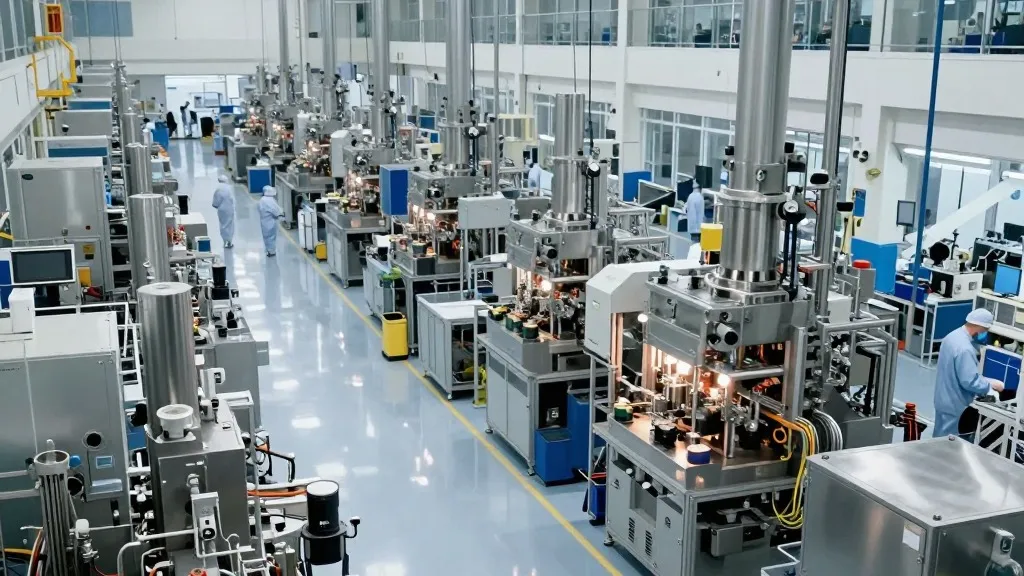
Elon Musk said equipment suppliers, including ASML, are accelerating deliveries of critical manufacturing tools for the Terafab semiconductor plant, a joint venture between Tesla and SpaceX. The facility in Gibbons Creek, Texas, is intended to produce logic, memory, and advanced packaging components under one roof. Once operational, the project aims to fabricate technology for AI computing systems, self-driving vehicles, Optimus humanoid robots, and orbital data centers. Musk made the remarks during a live broadcast of SpaceX's Q3 2026 earnings call on X on October 20, 2026.
The facility is designed to manufacture a significant volume of AI computing power annually. The project's target is to produce 1 terawatt of AI compute capacity per year. To achieve this, the manufacturing line will utilize Intel's 14A process technology alongside extreme ultraviolet lithography systems. ASML is the sole commercial supplier of the high-end EUV machines required for this type of production. Other equipment suppliers named for the project include Applied Materials, Lam Research, KLA Corporation, and Tokyo Electron.
Musk stated that SpaceX plans to produce its first experimental test chip at a research facility in Austin, Texas, around the second quarter of 2027. For the main plant in Gibbons Creek, the company is targeting volume production in the third or fourth quarter of 2028. Musk described this schedule as highly aspirational and noted that the timeline carries big error bars. He expressed appreciation for suppliers accelerating equipment deliveries to support this outcome.
The timeline for Terafab is part of a broader effort to expand computing capacity. Musk reported that AI companies are expected to have 2.5 to 3 gigawatts of computing capacity active by the end of 2026. He stated he is confident about adding another 10 gigawatts in 2027, reaching a total of 13 gigawatts by the end of that year. To support this growth, SpaceX and xAI are acquiring next-generation NVIDIA hardware, including a cluster of 440,000 Vera Rubin GPUs.
The scale of the Terafab project has drawn attention regarding its potential output. Once fully operational, the commercial value of the chips produced would be comparable to the gross domestic product of major countries. For context, the 20th largest national economy, Switzerland, has a GDP of approximately $1.14 trillion. The project's goal to produce 1 terawatt of computing power annually represents a target significantly higher than current global capacity.
Estimates regarding current global capacity place total AI-optimized data center capacity at roughly 44 gigawatts as of late 2026. This figure represents a fraction of the planned output for Terafab. However, industry data indicates that global AI computing capacity has grown by roughly 3.3 to 3.4 times per year since 2022. Despite the ambitious nature of the project, Musk emphasized that suppliers are working to deliver the necessary tools for the facility's construction.
Intel joined the Terafab venture in April 2026 to help develop fabrication technology. The company provides access to its 14A manufacturing process for the project. In addition to US-based suppliers, talks are ongoing with approximately 10 South Korean equipment makers, including Hanmi Semiconductor and HPSP. These companies would provide specialized equipment for packaging and processing.
The next step for the project involves the delivery of manufacturing equipment. Reports indicate the first EUV tool for Terafab was slated for delivery in mid-2027. It remains unclear if this delivery is part of the accelerated schedule referenced by Musk. The company is working toward the goal of volume production at the primary facility in late 2028.
Source: Tom's Hardware