AI Giants Face New Mandate: Pay Local Communities to Offset Energy Costs
President Trump has called for a financial dividend from data center builders to locals, aiming to offset rising utility bills and reduce community opposition to new AI infrastructure.
By Malcolm Davis ·
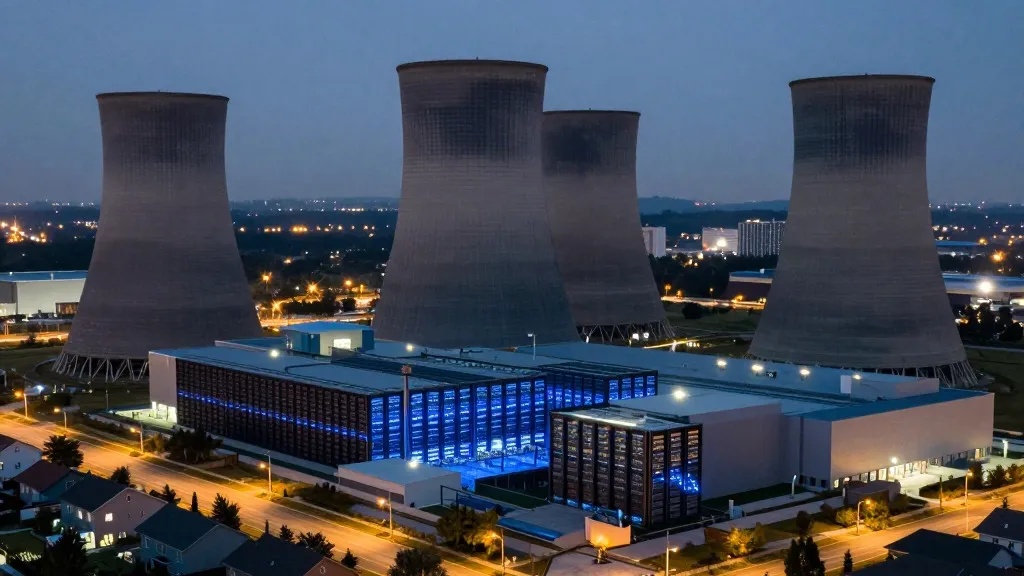
In a decisive move to address growing public resistance to artificial intelligence infrastructure, President Donald Trump has issued a directive demanding that data center builders and AI hyperscalers provide a financial dividend to local communities. The core of this proposal is designed to mitigate the impact of rising electricity costs on residents, with the administration arguing that such payments could potentially lower local energy prices. By requiring these massive facilities to share the economic burden, the White House aims to make the presence of data centers more acceptable to the neighborhoods they occupy, turning a source of friction into a potential source of benefit.
The announcement, made via a post on Truth Social, goes beyond previous executive actions. While the administration had already ordered these companies to generate their own electricity, this new mandate specifically requires that any excess power produced be either given or sold back to the local community. This requirement is intended to prevent utility rate increases for nearby residents and, in some cases, actively drive costs down. The President emphasized that this financial arrangement is key to securing community approval for new construction projects.
This policy shift comes in response to widespread protests across the United States. Local communities have frequently pushed back against AI data centers due to their outsized environmental and economic footprint. Residents in small towns and suburban areas have cited rising electricity bills, persistent noise pollution, water shortages, air quality degradation, and deforestation as primary grievances. These factors have made the expansion of AI infrastructure a contentious issue in many regions, often leading to delays or rejections of proposed projects.
The Trump Administration’s strategy is twofold: it seeks to maintain its lead in the global AI arms race against China while simultaneously winning back local favor. By mandating that data centers pay something back to the affected communities, the government hopes to smooth the path for the rapid deployment of AI capabilities. The specific mechanism of this dividend remains under development, but given the focus on electricity, it is expected to take the form of partial subsidies for rising utility costs. This would directly alleviate a pain point that affects households within the immediate vicinity of these power-hungry facilities.
Recent legislative actions support this approach. A recently passed act already requires data centers to shoulder the cost of grid upgrades, preventing these expenses from being passed on to local taxpayers. The new dividend proposal builds on this foundation by utilizing the excess electricity generated by the facilities themselves. The administration argues that if a data center is producing more power than it consumes, that surplus should benefit the local grid and, by extension, the local economy.
President Trump highlighted the effectiveness of financial incentives in his announcement, noting that data centers which were previously unpopular in certain areas have become highly popular once a financial deal was struck. "MAKE DEALS, and get them built!!!" the President concluded, urging swift action to capitalize on this new framework. The rhetoric suggests a belief that monetary compensation is the primary barrier to community acceptance, rather than the physical or environmental characteristics of the data centers themselves.
However, the sufficiency of these financial dividends remains a subject of debate. While addressing energy costs is a significant step, it is only one facet of a complex problem. Critics point out that other major challenges, such as enormous water consumption, ecological damage, and ongoing pollution, are not solved by a simple financial payment. These environmental impacts continue to make AI data centers a difficult sell in many locations, regardless of the economic benefits offered to residents.
The practical implementation of this mandate will also face scrutiny regarding corporate profitability. The term "dividend" traditionally implies a distribution of profits, yet many new data center builds are likely to be in a loss-making phase while construction costs are recouped. This raises questions about the long-term sustainability of the payments. Furthermore, the type of power generation currently being installed in the short term is often reliant on gas-powered generators, which are noisy and polluting. This creates a potential contradiction where locals may receive financial relief but continue to endure the environmental side effects of the energy production method.
Ultimately, the success of this mandate will depend on whether the financial incentives are substantial enough to outweigh the other downsides of hosting a data center. Without strict requirements or enforcement mechanisms, companies may be inclined to take the path of least resistance. As the administration pushes for more data centers to be built, the next few months will reveal whether this "energy dividend" model can truly win over skeptical communities or if it will remain a symbolic gesture in the broader debate over AI infrastructure.
Source: Tom's Hardware